Nankan Somen



| Registration Number | 174 |
|---|---|
| Name of the GI | Nankan Somen |
| Class | Processed Foodstuffs |
| Date of Protection | 2026/03/25 |
| Producing Area |
Kumamoto Prefecture
Nankan Town, Tamana County |
| Applicant - Name and Address | Nankanmachi Seki Somen Manufacturing Association 1500-1 Sekimachi Nankanmachi Tamana County, Kumamoto Prefecture |

Characteristics
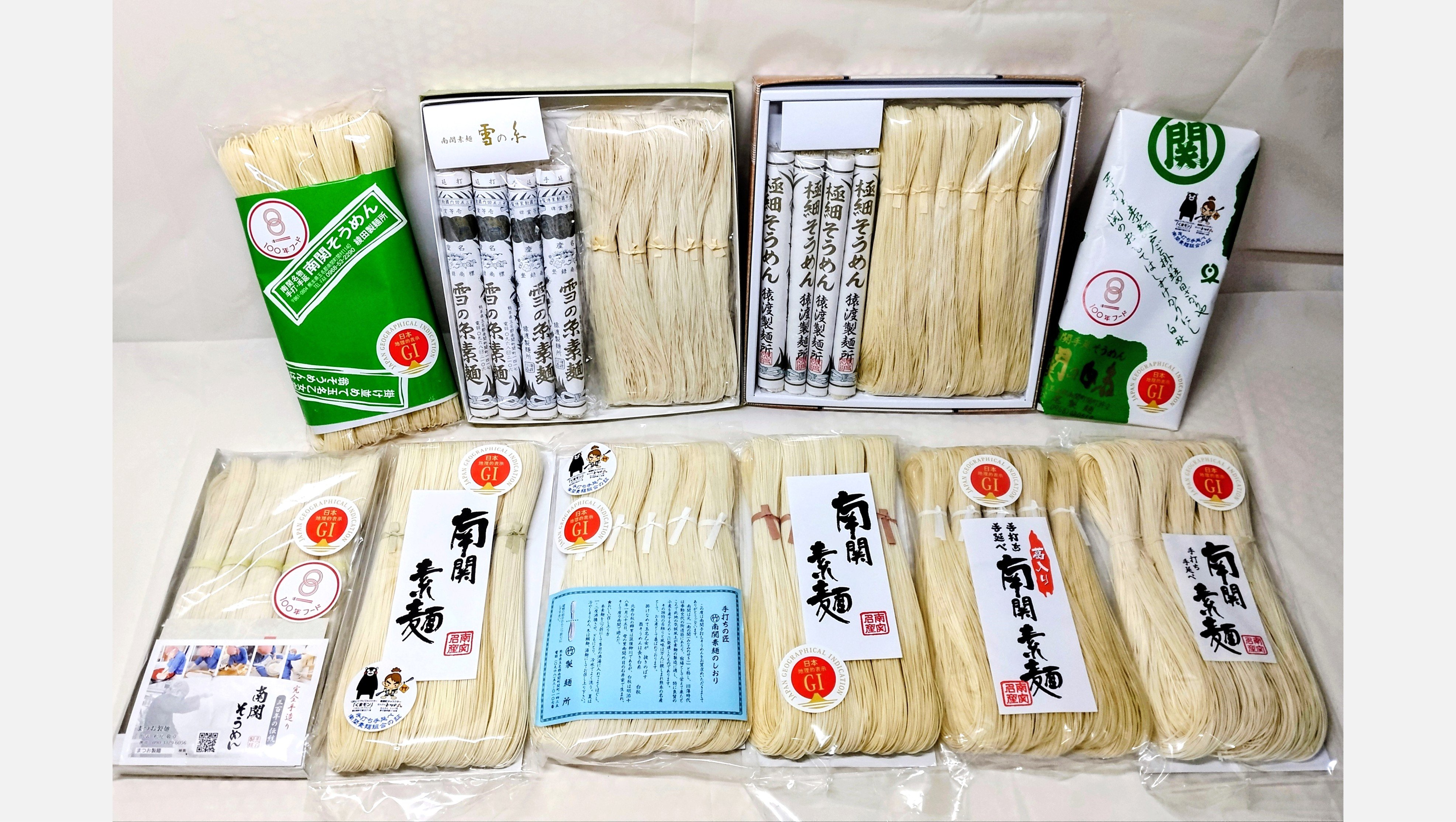
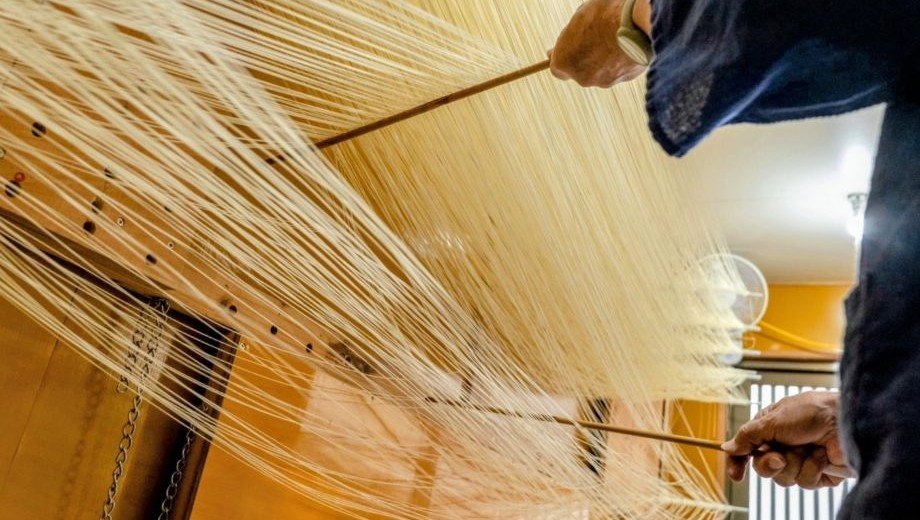
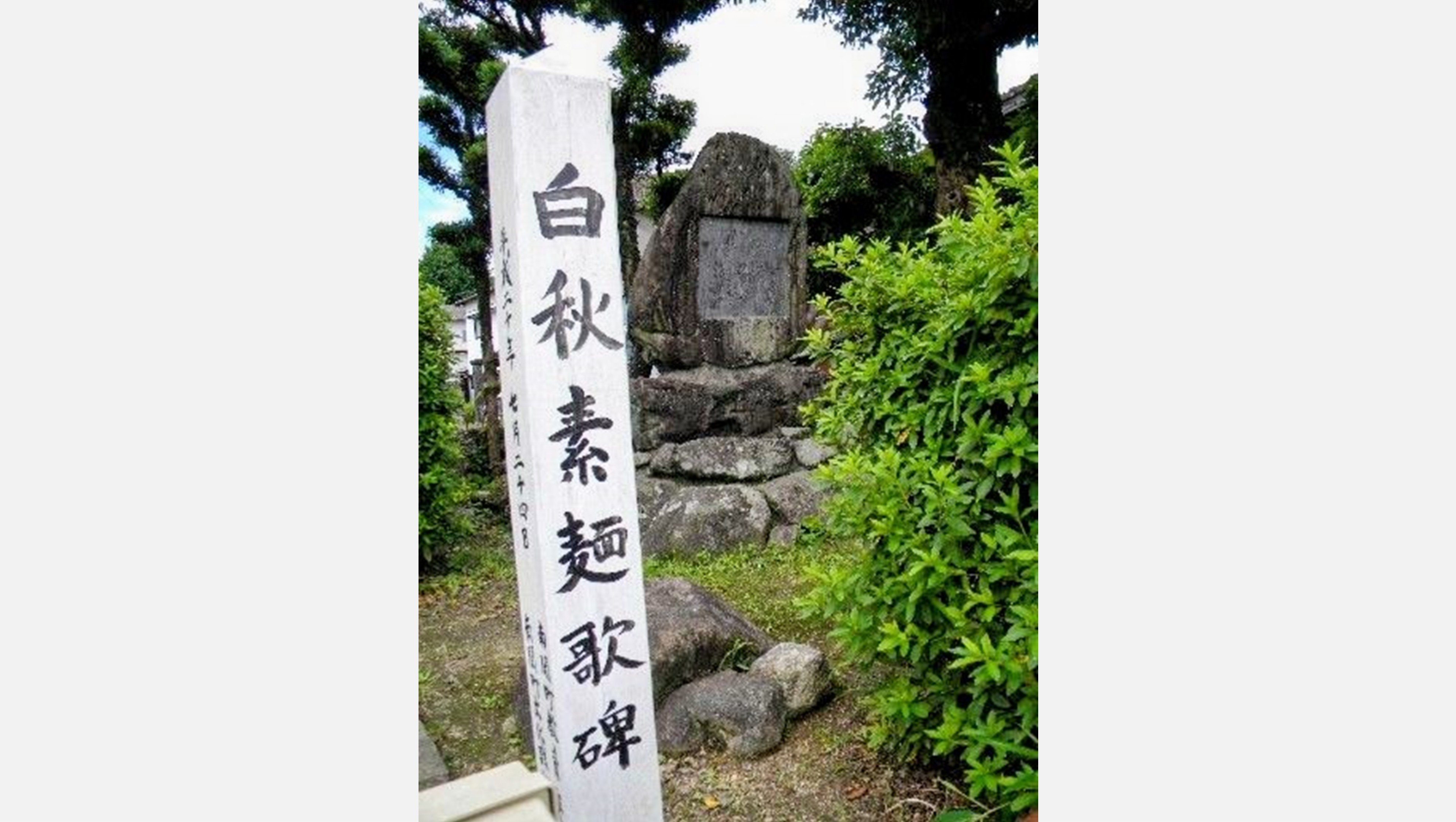
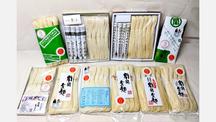
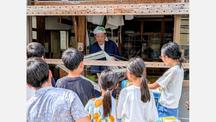
"Nankan Somen" is a type of somen (thin noodles) that has been produced in Nankan Town, Kumamoto Prefecture, since the Edo period. It is made and stretched entirely by hand, without any machinery-a traditional method that is rare even in Japan. Because of its rarity, it is known as "elusive somen". It is highly regarded by consumers for its smoothness when swallowed and firm, resilient texture. Despite limited production, producers receive numerous orders from across Japan.
Production method
The ingredients are wheat flour, salt, water, and edible vegetable oil.
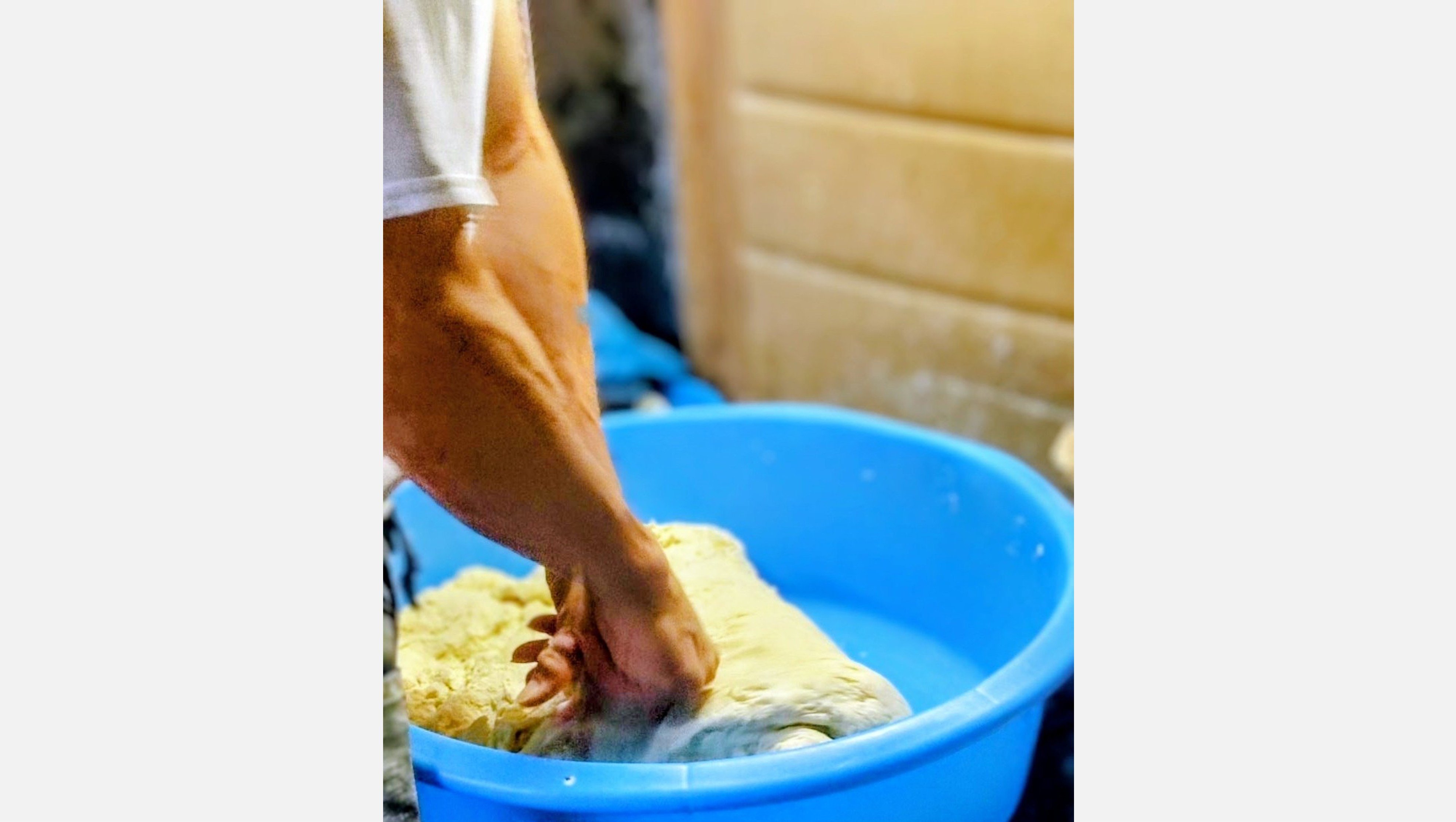
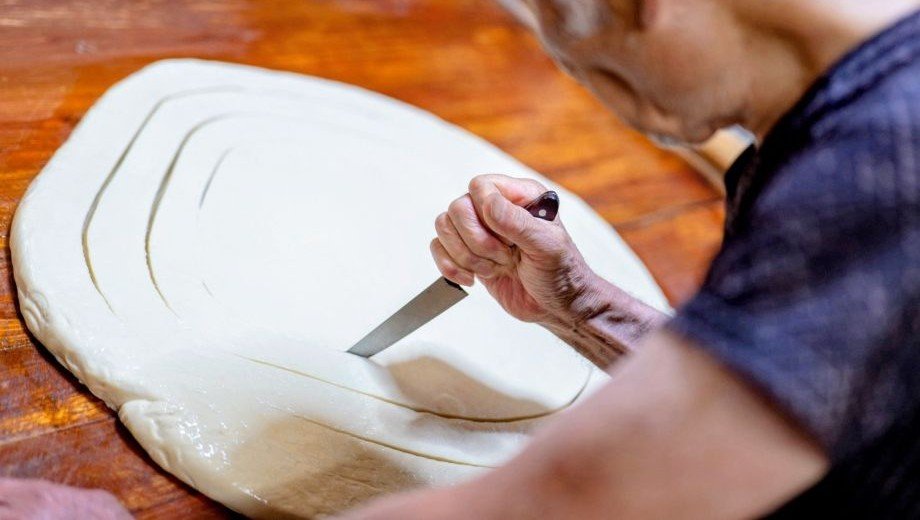
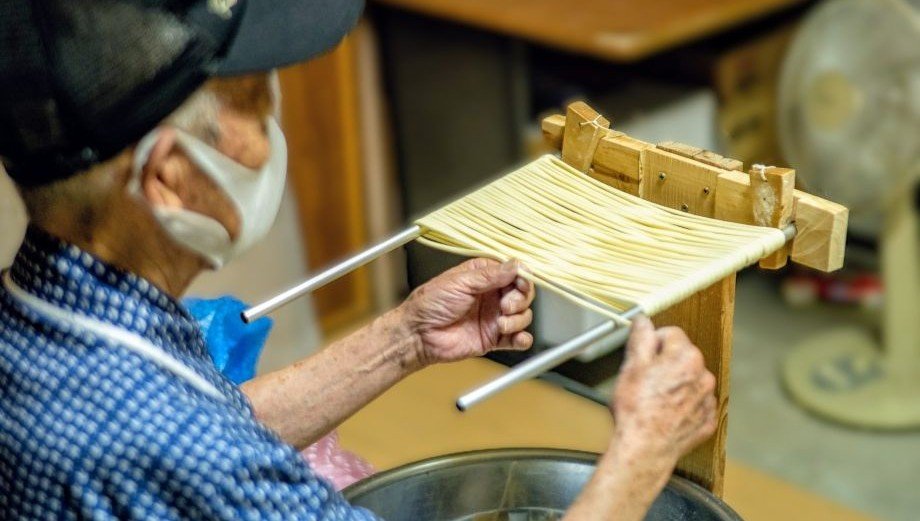
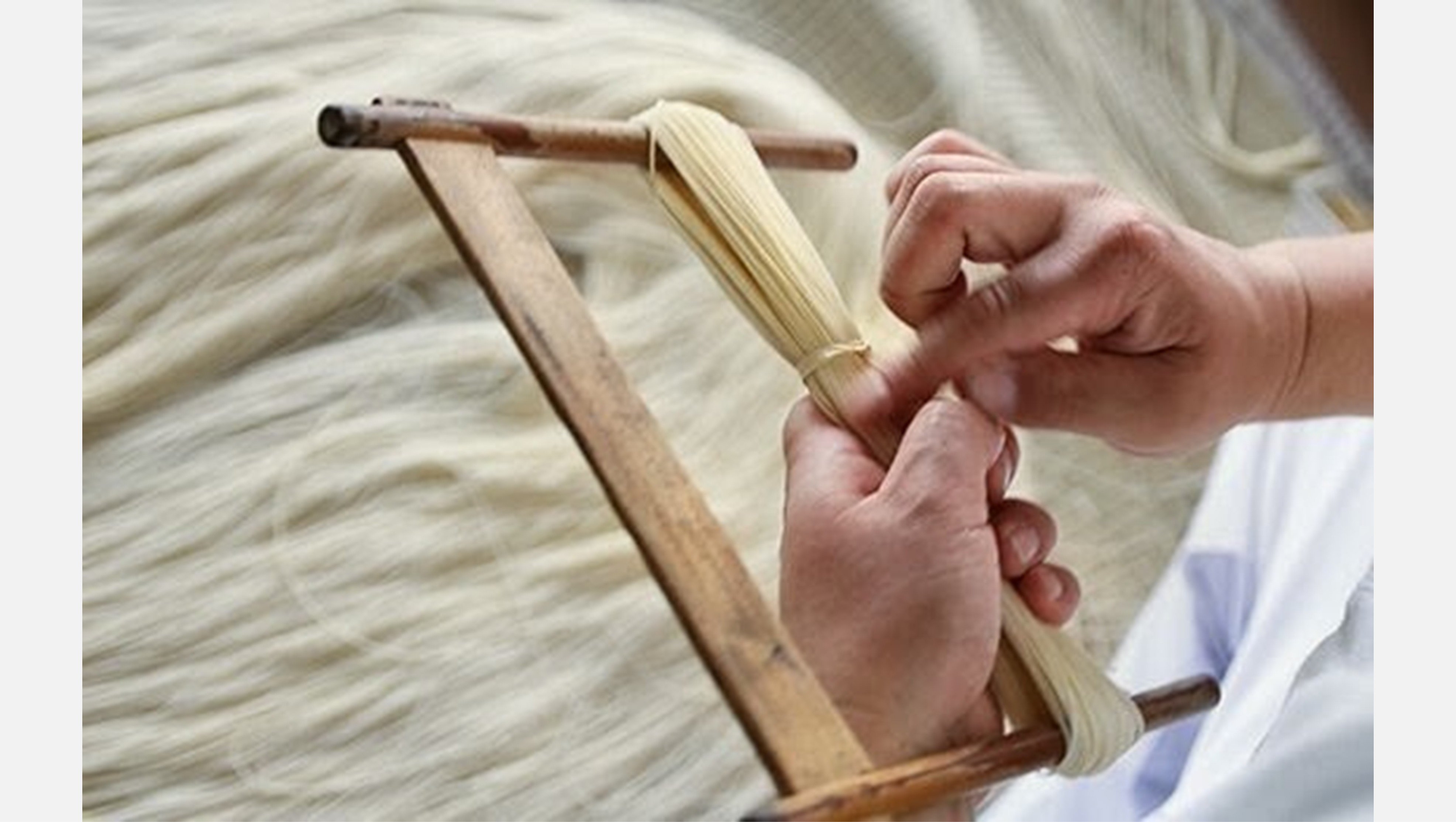
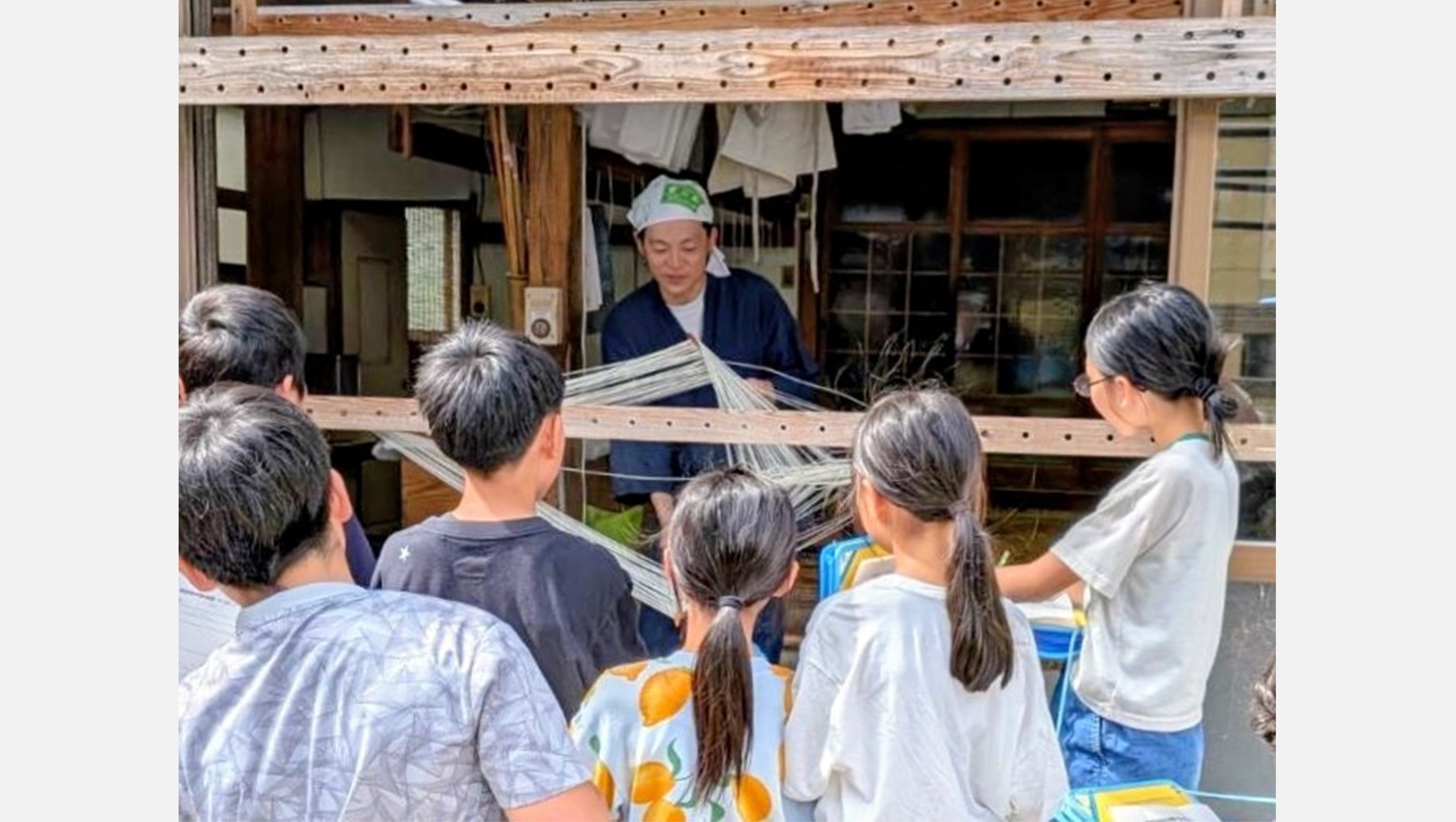
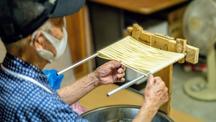
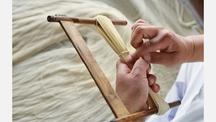
Producers knead wheat flour with salt water to make a dough called "dago", which is then rolled out with a rolling pin and cut into a spiral. The strands of dough are twisted and stretched until long and thin, then looped in a figure-eight pattern around two rods and left to rest before being stretched again by hand. Finally, the noodles are bent and bundled one bundle at a time using a special shaping frame, then dried. All these processes are performed by hand, giving "Nankan Somen" its distinctive texture.
Link with the production area
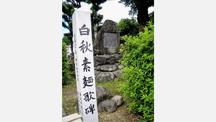
Nankan Town lies in a basin surrounded by mountains. Its low temperatures and relatively low humidity in winter make it well suited to somen production, where drying is crucial to quality. With high-quality wheat, salt, and edible oil available locally since early times, somen production became widespread among farmers as a wintertime side business. The noodles have long been a local specialty of Nankan Town. During the Edo period (1), the Hosokawa clan, who ruled Higo Domain (2), presented them as gifts to the Tokugawa Shoguns. Production reached its peak in the mid-Meiji era (3), when more than 200 noodle-making workshops operated. During the Second World War, however, that number fell to just one. Producers gradually resumed operations after the war, and as of 2026, 10 workshops continue to make somen using traditional methods. In winter, the sight of somen producers stretching long noodles by hand under the eaves has become a familiar seasonal feature of both Nankan Town and Kumamoto Prefecture.
- The Edo Period: 1603-1867. It is a period of Japanese history characterized by the establishment of a shogunate (feudal military government) in Edo (now Tokyo). Political administration under the Tokugawa clan began when Tokugawa Ieyasu became the era's first shogun.
- Higo Domain : A domain was a feudal territory granted to a feudal lord by the shogun during the Edo period, along with its governing administration.Higo Domain (also called the Kumamoto Domain) encompassed most of present-day Kumamoto Prefecture.
- Meiji period: An era of Japanese history extending from 1868 to 1912, during which Japan shifted from feudalism under the Shogunate to a modernized nation state.

 Japanese
 English