Kawai Aka Shiso


| Registration Number | 160 |
|---|---|
| Name of the GI | Kawai Aka Shiso |
| Class | Vegetables/ Cereal grains/Pulses |
| Date of Protection | 2025/01/30 |
| Producing Area |
Iwate Prefecture
Kawai District, Miyako City (former Kawai Village) |
| Applicant - Name and Address | Kawai Shiso Brand Shinko Kyogikai(Kawai Shiso Brand Promotion Association) 186-1, Kawai 2-jiwari, Miyako City, Iwate Prefecture |
Producing Area

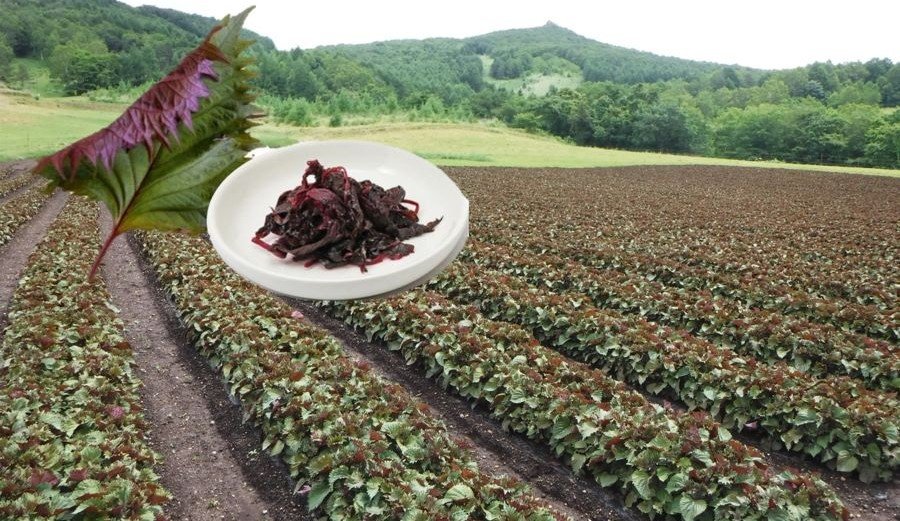
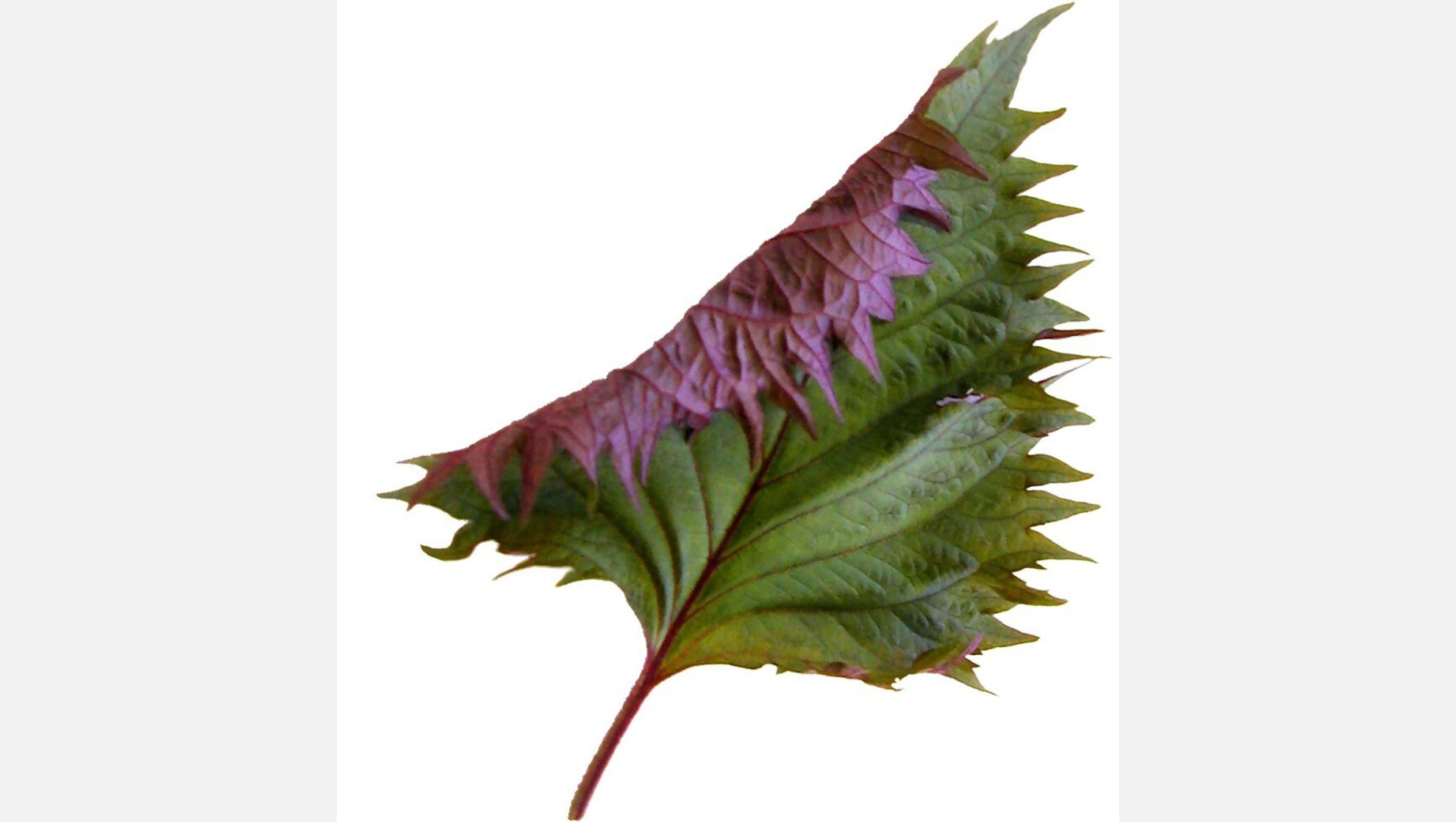
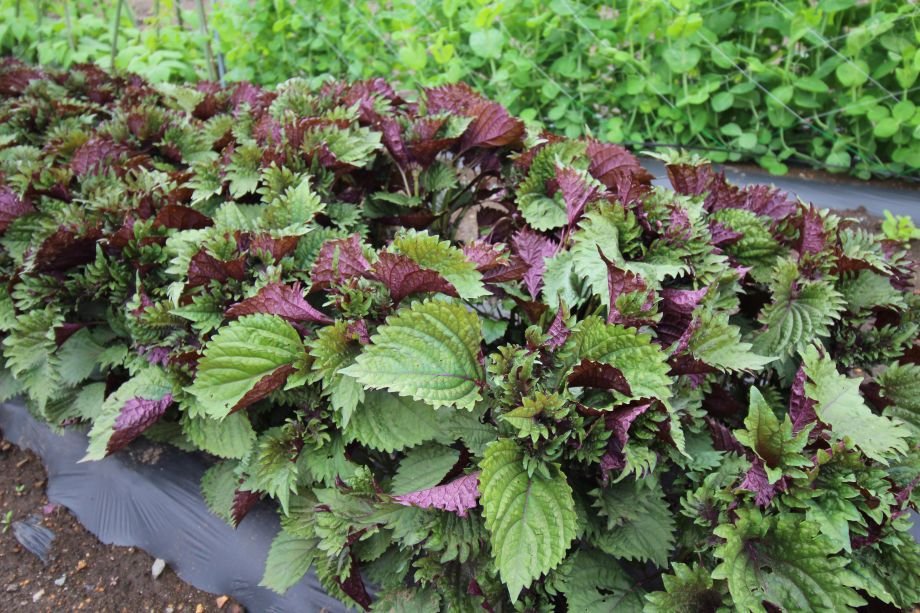
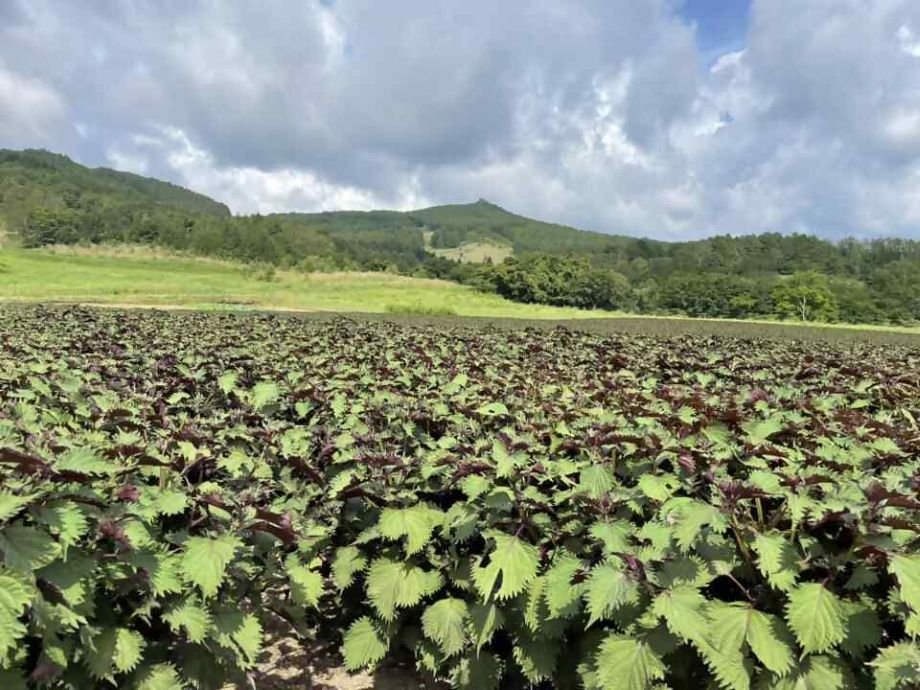
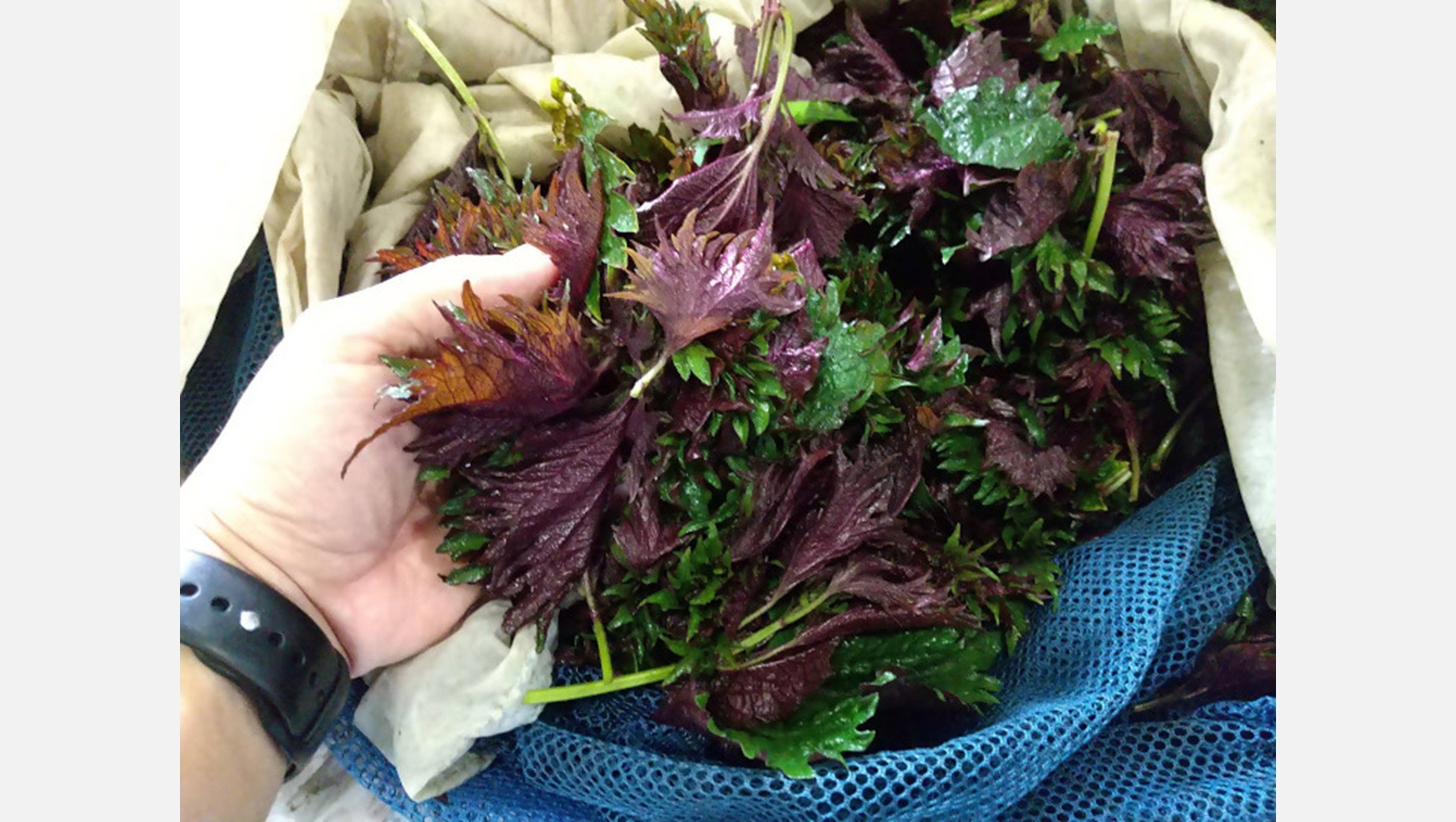
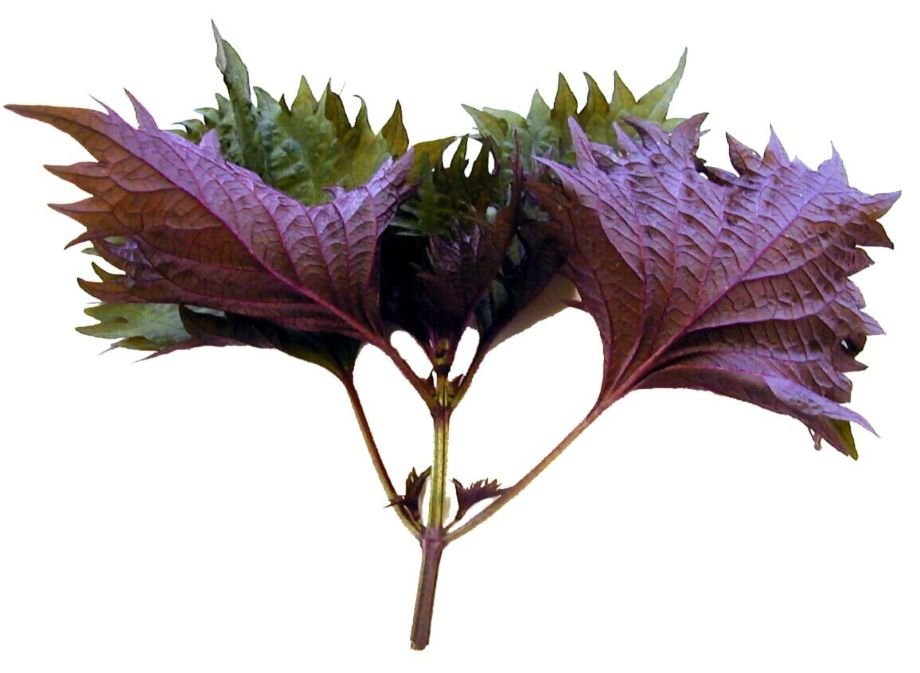
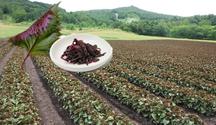
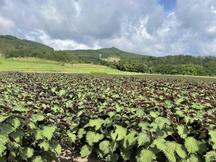
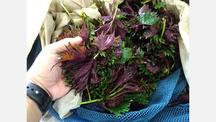
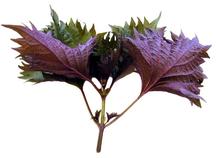
"Kawai Aka Shiso" is a type of perilla cultivated in Kawai District, Miyako City, Iwate Prefecture. This distinctive perilla, known as "katamen shiso" (single-face perilla), features leaves that are green on the front and reddish-purple on the back. The thick leaves weigh 1.2 to 1.8 times as much as ordinary perilla and have a rich fragrance.
When salted and seasoned with salt and citric acid, the fresh leaves of "Kawai Aka Shiso" impart a vivid reddish-purple color to pickled vegetables and other foods. Owing to its strong aroma, it is highly valued in production areas of umeboshi (1), and the perilla is used to produce Kishu Nanko plum (2) umeboshi.
A variety of processed products have been developed in the production area. "Shiso juice (perilla juice)" is especially popular as a regional specialty.
"Kawai Aka Shiso" is produced by using the breed designated by the Kawai Shiso Brand Suishin Kyogikai (Kawai Shiso Brand Promotion Association; hereinafter referred to as the "Association") and is cultivated and processed according to the methods prescribed by the Association.
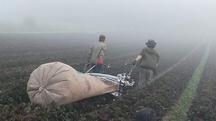
Originally, "katamen shiso" was a local variety cultivated by a small number of farmers in Kawai District. The pickle producer in Gifu Prefecture, who was a business partner of the farmers, recognized its high quality, rarity, and excellent processing characteristics, leading to the start of commercial trade.
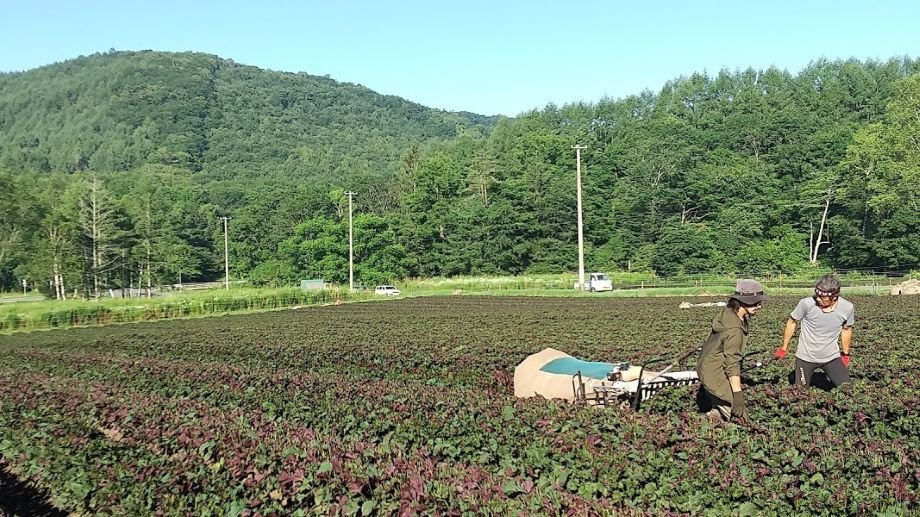
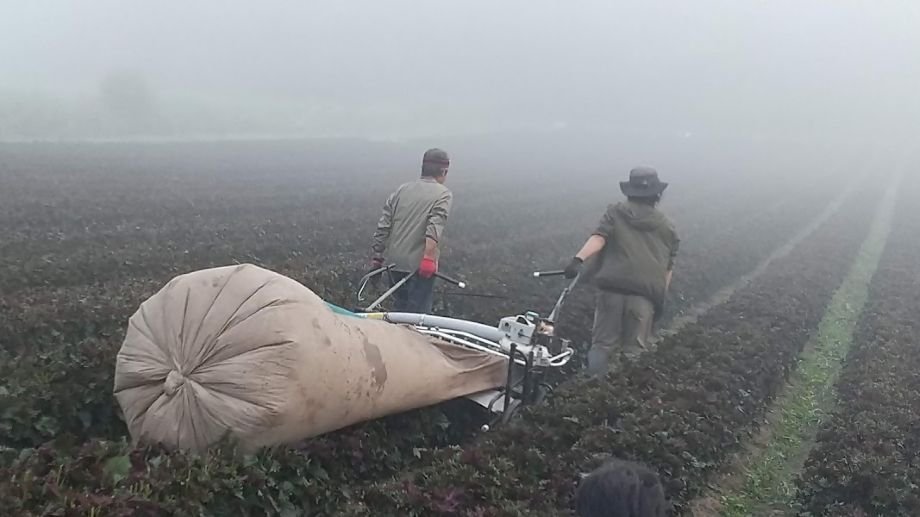
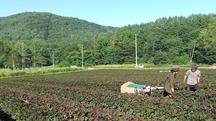
The region's natural environment, characterized by high-elevation mountains over 700 meters, helps suppress insect pests. The short harvest season, limited to July and August, allows the soil to recover its fertility during the winter off-season, resulting in high-quality perillas.
Full-scale cultivation began in 1985, promoted by the former Kawai Village government and the Agricultural Improvement and Extension Center of Iwate Prefecture. In 1992, the Kawai Shiso Seisan Kumiai (Kawai Shiso Producers' Cooperative) was established to implement integrated management of seed production, cultivation, harvesting, and processing across the entire region, ensuring the stable quality of "Kawai Aka Shiso".
Demands for salted perilla leaves, etc., increased rapidly thereafter, driven by trade with umeboshi production areas in Wakayama Prefecture. The leaves are an indispensable specialty of the region.
As of 2021, the annual production volume is 142 tons.
- Umeboshi: Umeboshi is highly salted pickled ume. It is a Japanese traditional article eaten since the Heian period (3). Served with onigiri (rice ball) and packed lunch, it is a representative food of Japan.
- Nanko plum: Nanko plum is a variety of Chinese plum (Prunus mume) mainly produced in Wakayama Prefecture. It is prized for its large fruits, thin skin, and thick, tender flesh, making it the ideal plum for producing umeboshi.
- Heian period: Heian period (794 to 1185AD) is a time division in Japanese history. The approximately 390-year-long period extends from the time when Emperor Kammu moved the capital to Heiankyo (present Kyoto City) until the establishment of Kamakura shogunate. It was when the emperor-centered political system based on the Ritsuryo codes shifted to aristocracy and governments by retired emperors and samurai. The Japanese medieval culture, including Buddhist and aristocratic cultures, also flourished during this period.



 Japanese
 English